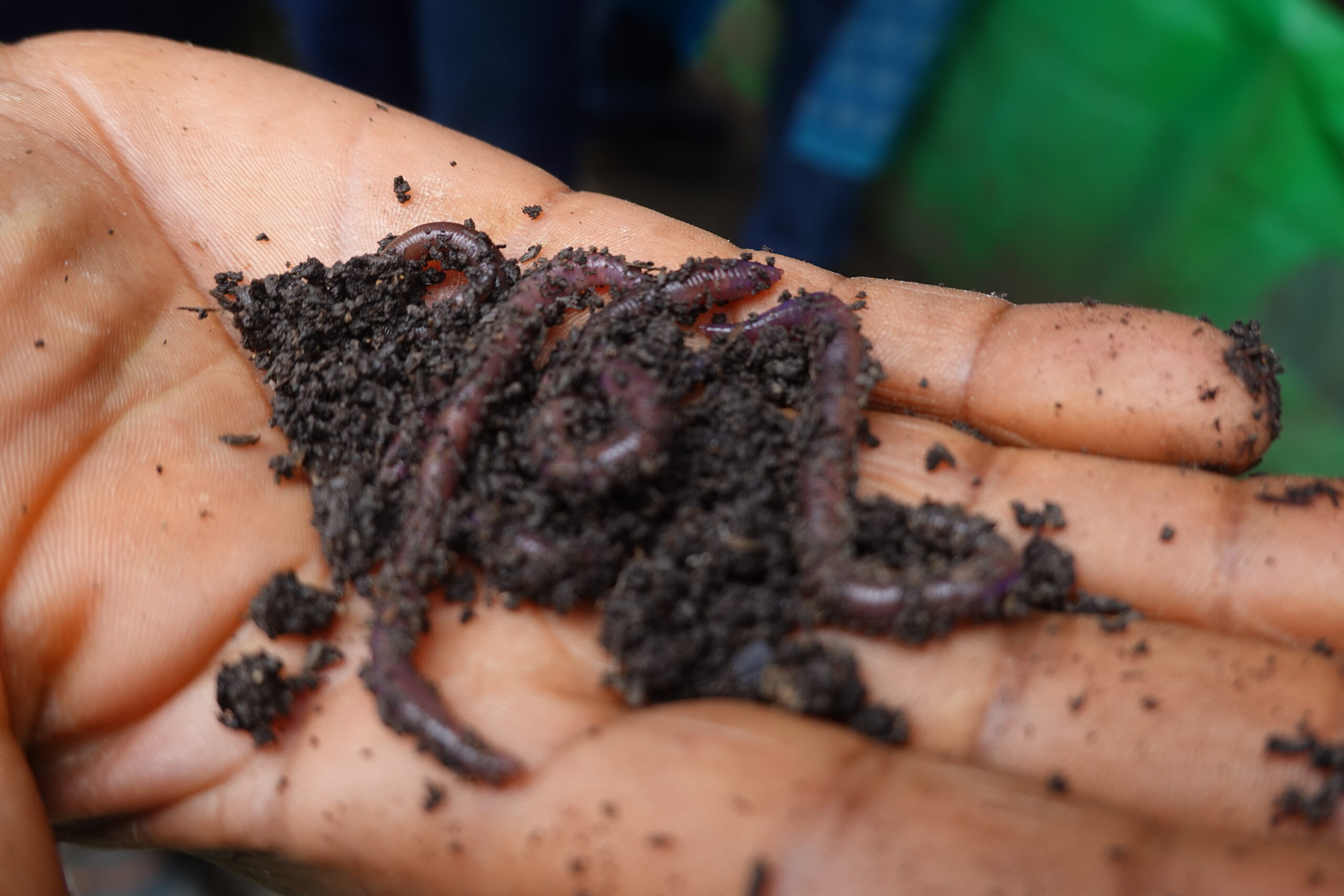
Vermicomposting System
Jaya Organic Yojana

Solution Overview & Benefits
Vermicomposting is a natural process in which earthworms break down organic materials such as crop residues, animal manure, and food waste into a stable and nutrient-rich soil amendment known as vermicompost. This material improves soil structure, enhances microbial activity, and increases the availability of nutrients for plants.
For farmers, vermicompost can reduce the need for chemical fertilizers while improving soil fertility and crop resilience. The process can be implemented at household, farm, or cooperative scale using simple infrastructure and locally available organic materials.
Key benefits include:
- Improves soil fertility and microbial activity
- Enhances soil water retention and structure
- Reduces dependence on chemical fertilizers
- Converts organic waste into valuable soil inputs
- Creates opportunities for local income generation
- Supports regenerative and climate-resilient agriculture

History & Development
Vermicomposting has been practiced for centuries in different forms, but modern vermicomposting systems were developed and refined in the 20th century as scientists began studying the role of earthworms in soil ecosystems.
Research demonstrated that worm-processed organic matter contains higher concentrations of plant-available nutrients, beneficial microbes, and natural growth stimulants compared with traditional compost.
Today, vermicomposting is used globally in both smallholder farming systems and commercial agricultural operations. It has become an important component of regenerative agriculture and soil restoration initiatives.
Availability
Vermicomposting systems can be implemented in most agricultural settings using simple materials and locally available organic waste.
Typical users include:
- Smallholder farmers
- Farmer cooperatives
- Community agricultural programs
- Urban farming initiatives
Earthworms commonly used for vermicomposting, such as Eisenia fetida (red wigglers), are widely available and can reproduce quickly once systems are established.
Specifications
Typical components of a vermicomposting system include:
- Composting beds, pits, or containers
- Organic feedstock (crop residues, manure, food waste)
- Vermicomposting earthworms
- Moisture management and shade or simple shelter
Production cycles typically range from 30 to 60 days, depending on environmental conditions and feedstock.
Vermicompost produced through these systems is usually applied directly to fields or packaged for local distribution.
Additional Information
In some systems, vermicompost is enriched with beneficial microorganisms such as Trichoderma to further improve plant health and soil resilience. These formulations are sometimes referred to as Tricho-vermicompost (TVC).
Similar solutions...
Get in Touch!
Get in touch with us by filling out the form or emailing us at contact@techxlab.org.