ECAR is a water treatment technology designed to bring locally affordable and sustainable arsenic-safe water to rural communities.
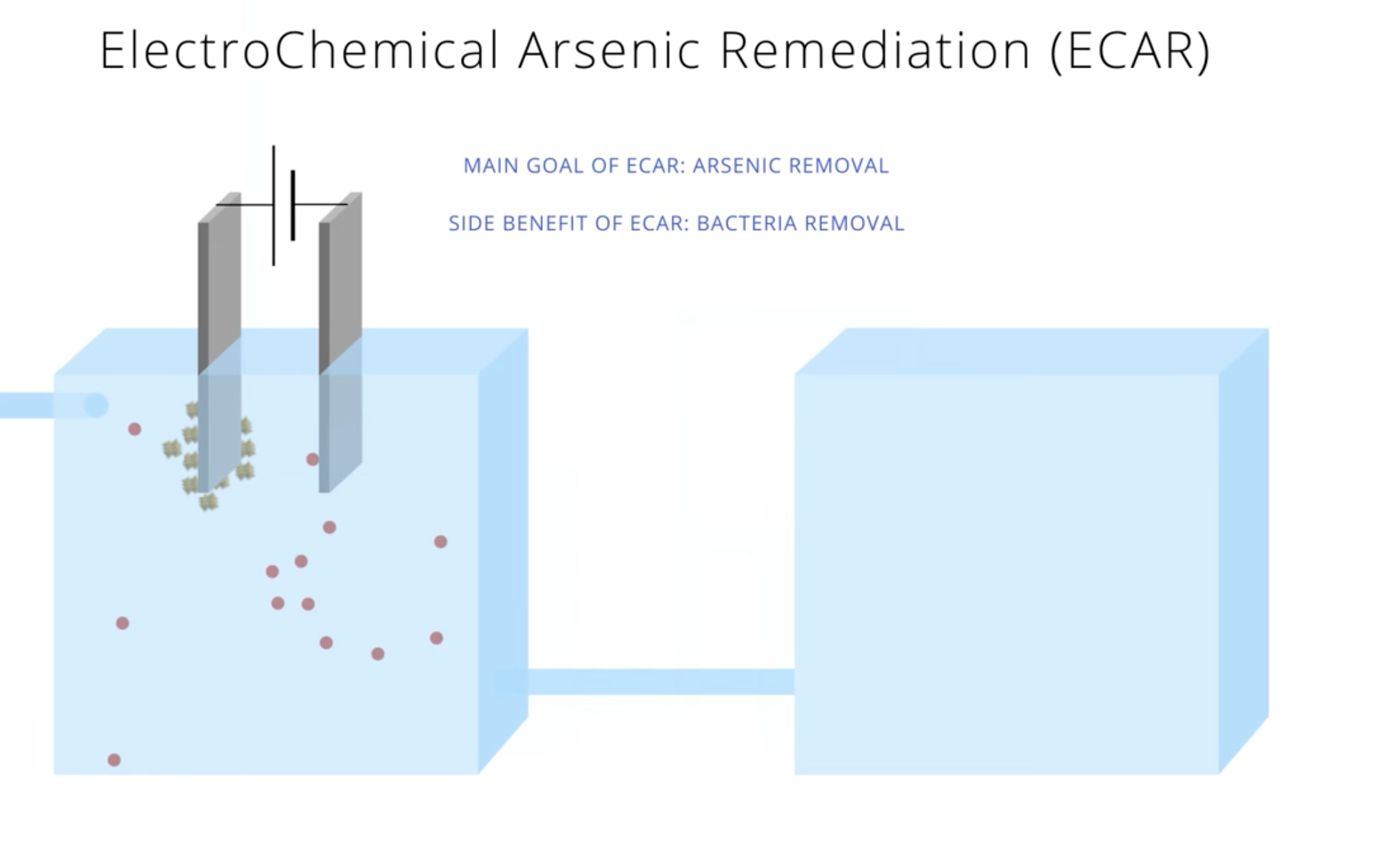
In ECAR, or ElectroChemical Arsenic Remediation, ordinary steel plates use low voltage electricity to produce iron oxide (e.g. rust) particles in water that adsorb and trap arsenic. During the process, arsenite (which is more toxic and difficult to remove) is converted into arsenate, allowing the process to be highly effective under robust conditions.
Treated water exceeds international WHO standards for arsenic and iron across many groundwater sources. The electrodes are cleaned by reversing the current, making operation and maintenance simple and non-hazardous.
The technology was designed to work within a sustainable service delivery model that can cover the cost of an electricity source and still sell arsenic-safe water at a locally affordable price while simultaneously covering all costs.
The requirements for maintenance are low and electrode passivation can be limited by reversing voltage regularly. Operating ECAR is simple and non-hazardous: voltage is very low (about 3 V DC) and no corrosive chemicals are needed.
ECAR can be operated by trained local community members.
Operating costs are extremely low (~ 0.04 USD/l), making it possible to sell the arsenic-safe water at a locally affordable price while simultaneously covering the expenses.